How to Ensure Compliance When Buying Surgical Instruments Online: A Practical Guide for Buyers

Buying surgical instruments online offers convenience and access to global suppliers. However, compliance remains a critical concern because these instruments must meet strict medical standards. Therefore, buyers must follow a structured approach to verify quality, certifications, and supplier reliability before placing orders.
This guide explains how to ensure compliance when buying surgical instruments online, helping healthcare providers, distributors, and procurement teams avoid costly mistakes.
Verify Certifications and Regulatory Approvals
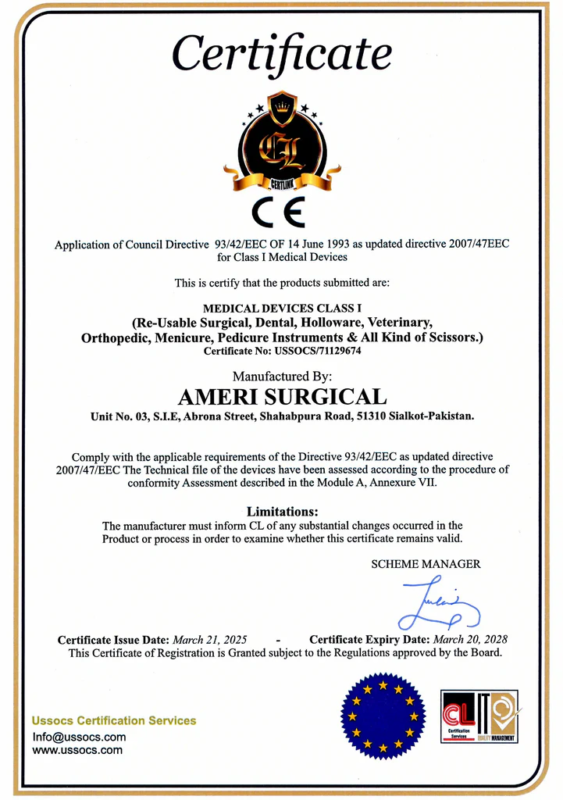
Start by confirming that the instruments meet the required certifications for your target market. Without proper certification, products may fail regulatory checks or get rejected at customs.
Buyers should check for:
- ISO 13485 certification for manufacturing quality
- CE marking for European markets
- FDA registration for the United States
- UKCA marking for the United Kingdom
Moreover, verify that certificates are valid and issued by recognized bodies.
Check Supplier Credibility and Experience
Not all online suppliers maintain the same standards. Therefore, buyers should evaluate supplier credibility before making any purchase.
Look for:
- Verified business profiles
- Export history and client references
- Clear communication and documentation
- Specialization in surgical instruments
In addition, suppliers with consistent international experience usually provide better compliance support.
Request Product Documentation and Traceability
Compliance requires more than certifications alone. Buyers must also verify supporting documentation for each product batch.
Essential documents include:
- Certificates of conformity
- Material certificates
- Batch numbers and traceability records
- Sterilization compatibility information
As a result, proper documentation ensures transparency and accountability.
Order Samples and Perform Quality Checks
Before placing bulk orders, request samples and test them carefully. This step helps confirm whether the instruments meet clinical and regulatory expectations.
During evaluation:
- Check surface finish and alignment
- Test cutting edges and grip strength
- Verify corrosion resistance
Therefore, sample testing reduces the risk of receiving substandard products.

Review Packaging and Labeling Standards
Proper packaging protects instruments during transit and supports compliance requirements. Poor packaging can lead to contamination or regulatory issues.
Ensure that:
- Packaging meets medical standards
- Labels include batch details and manufacturer information
- Protective wrapping prevents damage
Moreover, clear labeling improves traceability and inventory control.
Understand Import Regulations and Local Requirements
Each country has specific regulations for importing medical devices. Therefore, buyers must align purchases with local compliance rules.
This includes:
- Checking import documentation requirements
- Verifying customs clearance standards
- Confirming product classification
As a result, buyers avoid shipment delays and legal complications.
Use Secure Payment and Verified Platforms
Online transactions require additional caution. Buyers should use secure payment methods and verified platforms to reduce financial risk.
In addition:
- Avoid unverified suppliers offering unrealistic pricing
- Confirm order terms and delivery timelines
- Maintain written agreements for compliance assurance
Therefore, secure transactions protect both financial and operational interests.
Work with Suppliers Offering Compliance Support
Reliable suppliers often assist buyers with compliance documentation and regulatory guidance. This support simplifies the purchasing process and reduces administrative burden.
Such suppliers:
- Provide ready-to-use compliance documents
- Offer consistent product quality
- Support long-term procurement needs
As a result, buyers benefit from smoother transactions and fewer compliance challenges.
Final Thoughts
Ensuring compliance when buying surgical instruments online requires careful verification at every stage. By checking certifications, reviewing documentation, testing samples, and understanding import regulations, buyers can minimize risks and maintain regulatory standards. A structured approach leads to safer purchases and long-term reliability.
If you are looking to buy compliant surgical instruments from a trusted supplier, visit Surgical Instruments. We provide certified, high-quality surgical instruments in small and bulk orders across the UK, USA, Canada, and Europe, ensuring reliability and compliance at every step.